Solved

DQ Rule - Attribute A is accurate if value is greater than Attribute B

  • June 30, 2026
  • 4 replies
  • 17 views

I would like to implement a DQ accuracy rule where Attribute A is accurate if and only if its value is greater than Attribute B. Attribute B cannot be derived from Attribute A. 


For example: 

Attribute A: Date of Death

Attribute B: Date of Birth

Rule: Date of death needs to be greater than date of birth for a particular person. 


Best answer by Katerina

Hi Kdrose,

This can be implemented by comparing the two attributes directly in the rule logic. 

For your example:

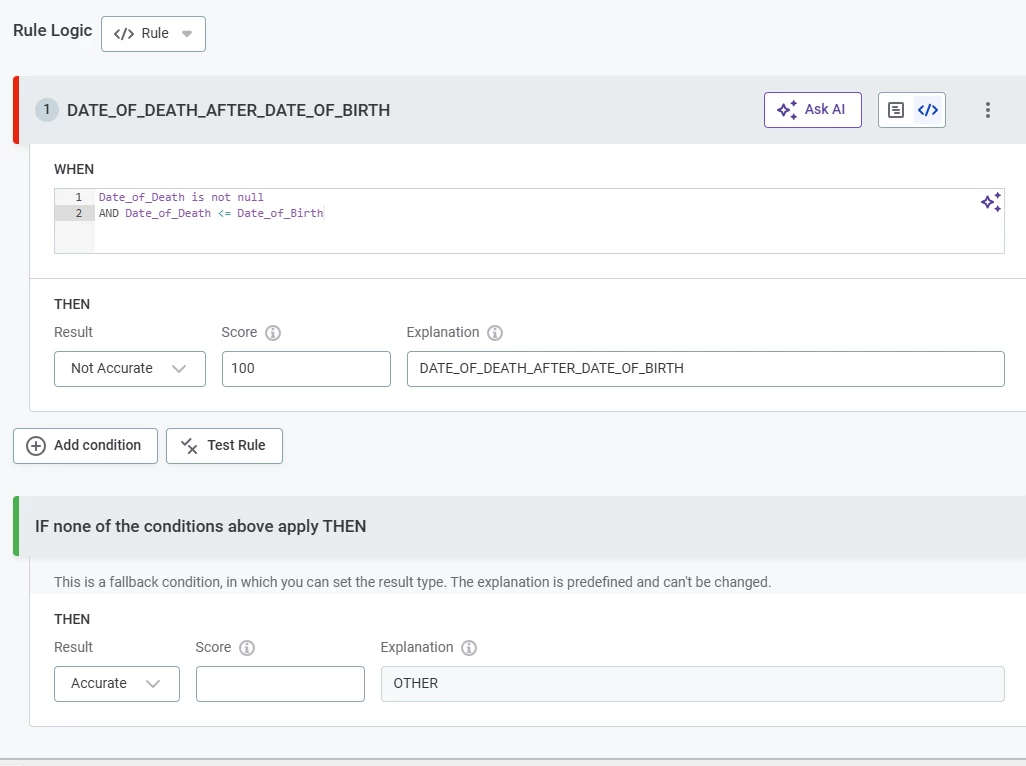
Rule Logic: Date_of_Death is not null AND Date_of_Death <= Date_of_Birth

In this example, a null Date of Death is considered valid, as the person may still be alive. The rule only verifies that when a Date of Death is provided, it is later than the Date of Birth.

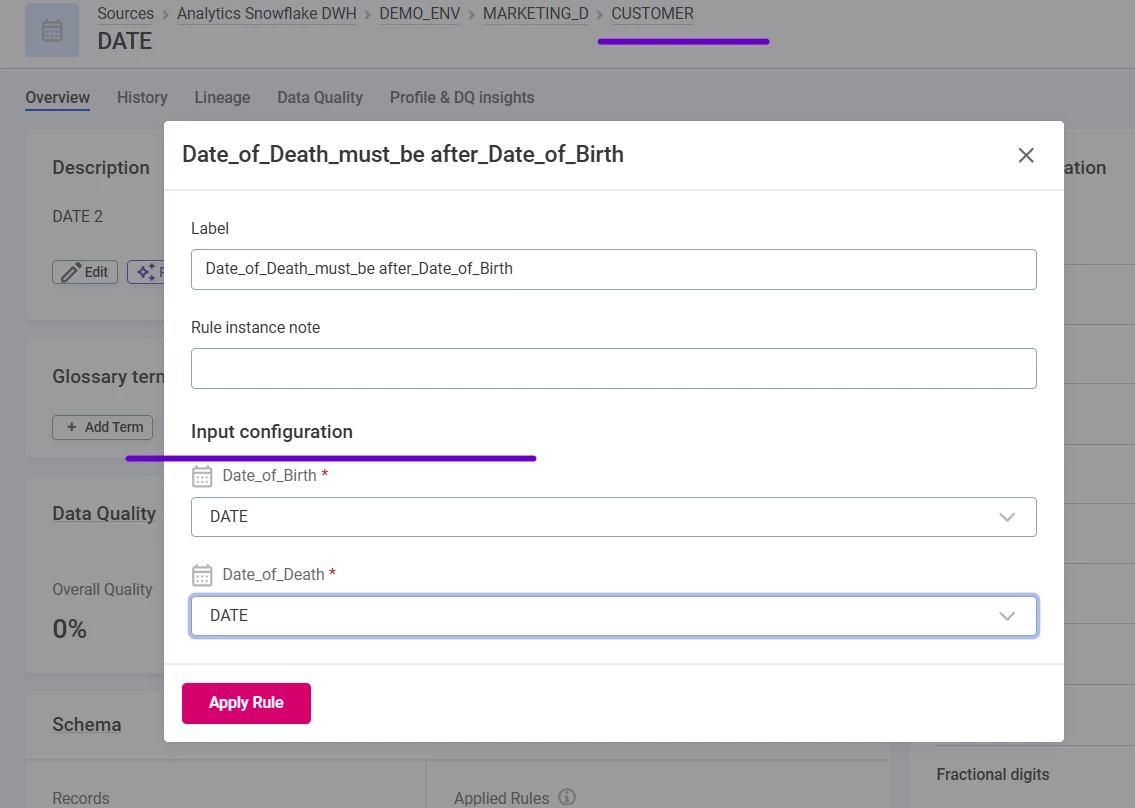
Attribute B does not need to be derived from Attribute A. Both attributes can be mapped as inputs to the rule, and the rule evaluates their values for the same record.

Regards,
Katia


4 replies

Forum|alt.badge.img+1
  • Ataccamer
  • Answer
  • June 30, 2026

Hi Kdrose,

This can be implemented by comparing the two attributes directly in the rule logic. 

For your example:

Rule Logic: Date_of_Death is not null AND Date_of_Death <= Date_of_Birth

In this example, a null Date of Death is considered valid, as the person may still be alive. The rule only verifies that when a Date of Death is provided, it is later than the Date of Birth.

Attribute B does not need to be derived from Attribute A. Both attributes can be mapped as inputs to the rule, and the rule evaluates their values for the same record.

Regards,
Katia


Forum|alt.badge.img+2
  • Ataccamer
  • June 30, 2026

And in ONE Agentic there is an option to choose to which attribute report the result (Doc: Score only the attributes a rule targets)


  • Author
  • Data Voyager
  • July 1, 2026

​@Katerina  - Thank you for your answer. 


“This can be implemented by comparing the two attributes directly in the rule logic. 

For your example:

Rule Logic: Date_of_Death is not null AND Date_of_Death <= Date_of_Birth”


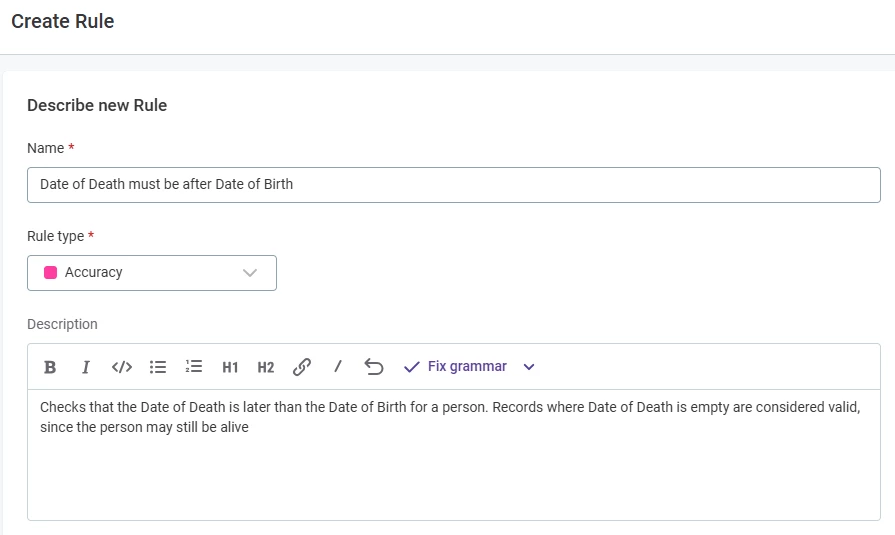
So that means I need to assign each attribute to a separate term? (screenshot below) 


At the moment, Date_of_Death is a term based on a DB attribute of the same name. Date_of_Birth is not a term, but it is a DB attribute in the same table as Date_of_Death. So from your suggestion, I will need to create another term Date_of_Birth, so that the comparison of these attributes can be done at the term level, even though the term that I am interested to evaluate is only Date_of_Death?


Forum|alt.badge.img+1
  • Ataccamer
  • July 1, 2026

Hi ​@kdrose,

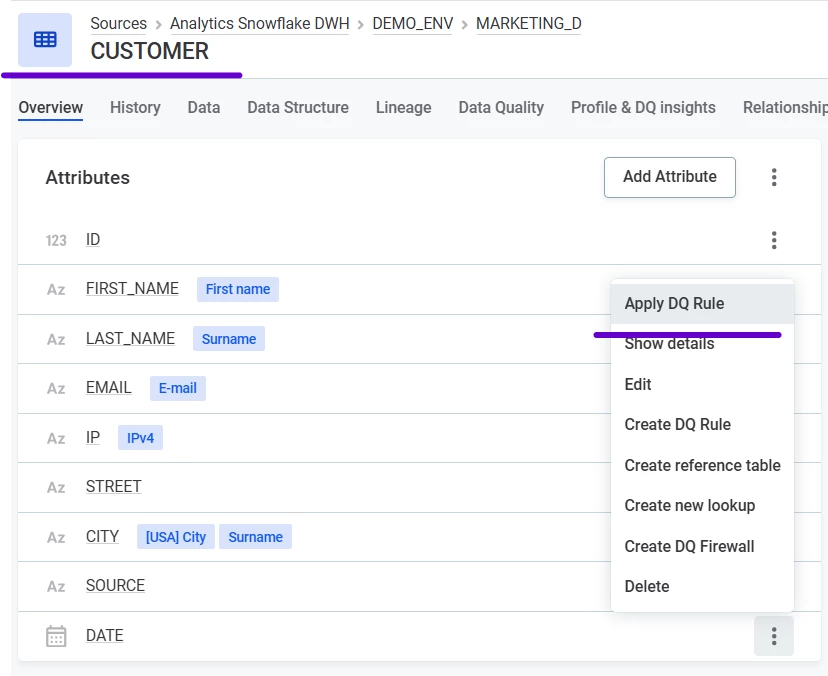
I understand now. It isn't possible to use rules with two attributes as a DQ rule assigned to a term. Such rules can only be applied directly to columns in a Catalog Item.


Just assign the rule to both attributes from the same table: the Date_of_Birth attribute and the Date_of_Death attribute.

In my example, I applied the rule to the same attribute for both the birth date and the death date simply because I couldn't find an example of a catalog item with two date attributes.

Kind regards,

Katia

Â